

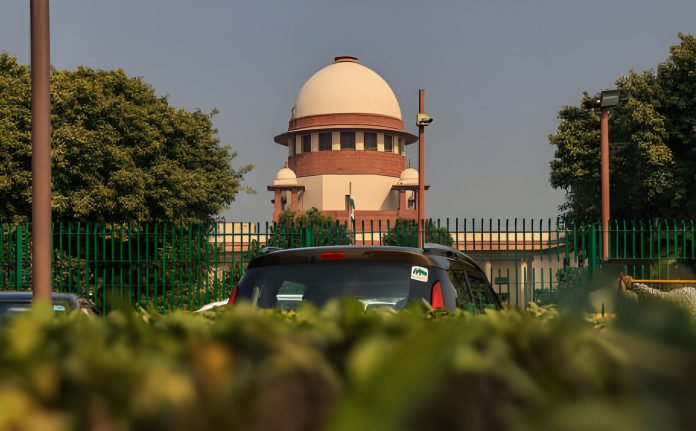
In a significant development for the legal landscape in India, the Supreme Court on Wednesday addressed the pressing question of whether litigants can directly approach high courts for anticipatory bail applications or if they must first seek relief from the sessions court. This matter now awaits deliberation by a three-judge bench.
Justices Vikram Nath and Sandeep Mehta remarked that this important issue requires examination by a larger bench once it is constituted. “This matter requires to be heard by a three-judge bench,” the court stated, emphasizing the complexity and importance of the discussion.
The court’s attention to this issue comes on the heels of a wider concern regarding the practices of high courts, particularly the Kerala High Court. On September 8, the Supreme Court highlighted the “regular practice” observed in Kerala, where anticipatory bail applications are often entertained directly, bypassing sessions courts entirely.
“One issue that is bothering us is that in the Kerala High Court, anticipatory bail applications are regularly entertained directly. Why is that so?” asked the bench. This comment underlines a growing concern regarding procedural consistency across Indian jurisdictions.
In its observations, the Supreme Court referenced notable provisions from both the older Code of Criminal Procedure and the newly enacted Bharatiya Nagarik Suraksha Sanhita (BNSS), 2023. The court pointed out that these statutes establish a clear hierarchy for how bail applications should be processed, suggesting that this established structure is essential for maintaining order in the legal system.
The Supreme Court specifically identified Section 482 of the BNSS, which deals with directions regarding bail grants to individuals facing imminent arrest. The court added, “It doesn’t happen in any other state. Only in the Kerala High Court… applications for anticipatory bail are regularly entertained directly.” This stark observation raises questions about the uniformity of legal procedures and standards across India.
This legal discussion was propelled by a case concerning two men who challenged a Kerala High Court order that denied them anticipatory bail. The petitioners had approached the high court directly without first seeking remedy from the sessions court, prompting significant legal scrutiny.
During the hearing, the Supreme Court noted that such practices might deprive courts of essential factual records typically presented before sessions courts. This, the justices argued, could adversely impact the effectiveness of judicial proceedings.
“We are inclined to consider whether the option to approach the high court is a matter of choice for the accused or whether it should be mandatory to first go to the sessions court,” the bench stated. This introspection raises important questions about the rights of individuals seeking anticipatory bail and the procedural obligations of the judicial system.
Furthermore, the Supreme Court has issued notices to the Kerala High Court, requesting its official response to this pressing issue. The outcomes from this deliberation could significantly reshape how anticipatory bail applications are dealt with across the country, setting a precedent for future legal practices.
The Supreme Court’s focus on these procedural aspects signals its ongoing commitment to ensuring a uniform judicial process in India. As discussions evolve, legal experts and practitioners will be keenly observing the implications of this case, not only for the accused but for the integrity of the legal system.
