

NEW DELHI, Sept 19: In a bold attack on the Election Commission, Congress leader Rahul Gandhi has made serious allegations concerning vote theft. He has branded the Commission as an ‘election watchman’ who instead of safeguarding democracy, has facilitated it.
Gandhi’s comments were made following his accusations against Chief Election Commissioner Gyanesh Kumar. He claims that the Commission is protecting those involved in what he describes as ‘vote chori,’ a term translating to vote theft.
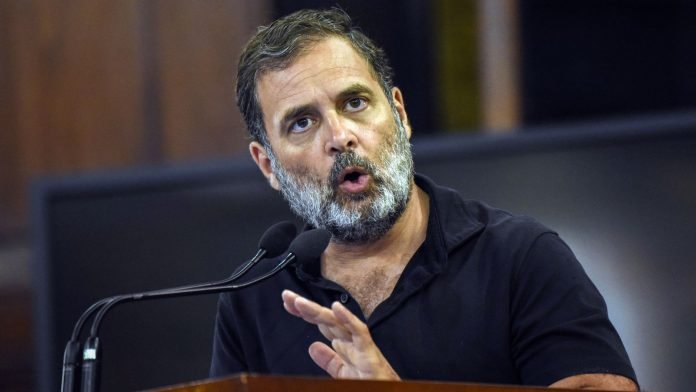
On September 19, during a press conference, he emphasized, ‘The election watchman stayed awake, watched the theft, and protected the thieves.’ This statement has evolved into a rallying cry for his supporters, sparking intense debate across India.
The Allegations Against the Election Commission
Gandhi’s criticisms didn’t stem from the ether; they drew on data he provided regarding alleged systematic vote deletions in Karnataka. Specifically, he referenced the Aland constituency, claiming that 6,018 votes were targeted in the lead-up to the 2023 assembly polls.
Additionally, he pointed to Maharashtra’s Rajura constituency, where he alleged that 6,850 voters were fraudulently added through automated systems. ‘This same operation is occurring in multiple states, including Haryana, Uttar Pradesh, and Bihar,’ he asserted, providing a broader context to his allegations.
Response from the Election Commission
In contrast, the Election Commission quickly dismissed Gandhi’s claims as ‘incorrect and baseless.’ They clarified: ‘No deletion of any vote can be done online by any member of the public, as misconceived by Gandhi.’ This rebuttal emphasizes the Commission’s stance on maintaining the integrity of the electoral process.
Gandhi’s comments included details of specific instances of vote manipulation. He scrutinized the Commission’s credibility, urging Gyanesh Kumar to perform his duty and cooperate with ongoing investigations by the Karnataka CID into the alleged voter deletions.
The Impact of Gandhi’s Comments
In a rapidly changing political landscape, such accusations can significantly influence voter sentiment. Gandhi believes that the youth of India, especially those surveyed from Gen Z, will play a crucial role in defending democratic processes. He stated, ‘The nation’s youth will defend the Constitution, protect democracy, and stop vote theft.’
Gandhi’s remarks are pertinent as they resonate with widespread concerns about electoral integrity. Political analysts note that his strategic focus on issues like vote theft is aimed to ‘mobilize the base’ and garner support as elections loom.
A Call to Action
The Congress leader is calling for immediate transparency from the Election Commission. He has demanded, ‘Gyanesh Kumar, do your job. Release the evidence to the Karnataka CID!’ This insistence on accountability underscores his commitment to electoral reform.
Gandhi also warned the Commission that if they do not comply, it would imply their complicity in what he terms the ‘murder of the Constitution.’ Such strong language illustrates the growing division between political parties in India.
Conclusion: A Heated Debate on Vote Integrity
As the debate over vote integrity continues to unfold, whether the Election Commission will take steps to address Gandhi’s concerns remains to be seen. The coming weeks may hold crucial insights as investigations proceed.
Gandhi’s ongoing crusade against vote theft has ignited conversation about electoral integrity in India. His claims, despite facing pushback, are likely to resonate with constituents increasingly concerned about the health of democracy.
As political winds shift, the implications of these allegations could forge a new narrative in India’s electoral politics, proving that the battle against perceived injustices in the voting process is far from over.
