
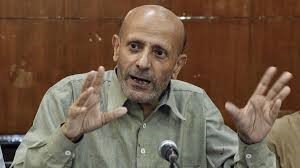
Sheikh Abdul Rashid, the Lok Sabha MP from Jammu and Kashmir’s Baramulla district, will observe a two-day hunger strike from October 1 to 3 in Tihar Jail, coinciding with Gandhi Jayanti. This initiative underscores the relevance of non-violence in today’s conflict-ridden world.
In a heartfelt handwritten letter addressed to Mahatma Gandhi, Rashid expressed deep concerns regarding the state of global peace. Currently incarcerated in New Delhi’s Tihar Jail for his alleged involvement in a terror funding case, Rashid stated the world is in desperate need of guidance from Gandhi’s teachings.
“Gandhi’s philosophy of non-violence is more relevant now than ever,” asserted Rashid, highlighting the irony of nations that promote peace while simultaneously engaging in violent acts. His sentiments resonate with the ongoing political turmoil and conflict across various regions, including Kashmir.
Rashid lamented that despite widespread discussions around Gandhi’s message, many leaders fail to reflect these principles in their actions. He wrote, “Those who speak most of your message, Bapu, hardly match their words with deeds,” emphasizing the gap between rhetoric and reality.
Expressing his anguish over the deteriorating situation in Kashmir, Rashid reflected on Gandhi’s legacy during the Partition, when Kashmir was viewed as an oasis of hope amidst widespread communal violence. He articulated a stark contrast between that vision and the current narrative surrounding Kashmiris, who face systemic branding as anti-national or militants.
“Being a Muslim is an honour for every individual, and true Islam is not radicalism,” he stated, addressing the pervasive stigma against the Muslim community in the current political climate. Rashid’s remarks shed light on the broader implications of how communities within India are often portrayed.
He criticized the silence of many who oppose draconian laws such as the Unlawful Activities (Prevention) Act (UAPA), stating that fear of legal repercussions inhibits meaningful dialogue about human rights. “Thousands lie in graves, men in prisons lose their lives, and thousands of us are in jails because of the misdeeds of Partition, for which nobody takes responsibility,” he emphasized.
Rashid also pointed out the plight of Kashmiri Pandits, insisting that historical truths regarding their protection by Kashmiri Muslims should not be forgotten. “Kashmiri Pandits, who by your own confession were protected by Kashmiri Muslims at the cost of their own lives, are still living as refugees,” he asserted, highlighting the ongoing humanitarian crisis.
His letter condemned the divisive politics that plague the region, arguing that Gandhi’s vision has been overshadowed by what he termed “draconian policies.” He voiced his belief that the state’s oppression is becoming a source of entertainment for fascist elements, while the commitment to non-violence is misinterpreted as weakness.
“I am sure your soul must be in a state of restlessness while watching what we Kashmiris are passing through since 1989,” Rashid wrote, invoking Gandhi’s enduring spirit in hopes of rekindling the essence of peace.
Concluding his plea, he poignantly stated that the very forces branding Muslims as outsiders with derogatory terms are the true enemies of the Indian state. “The ultranationalists are doing all that what the enemies of India cannot do,” he declared, calling for an introspection of national values.
Rashid’s hunger strike serves not just as a personal protest but as a powerful reminder for the nation to revisit Gandhi’s philosophy of non-violence and its implications in modern society. His actions and statements resonate with a growing sentiment that peace, rather than conflict, is the path forward for Jammu and Kashmir and the entire nation.
