

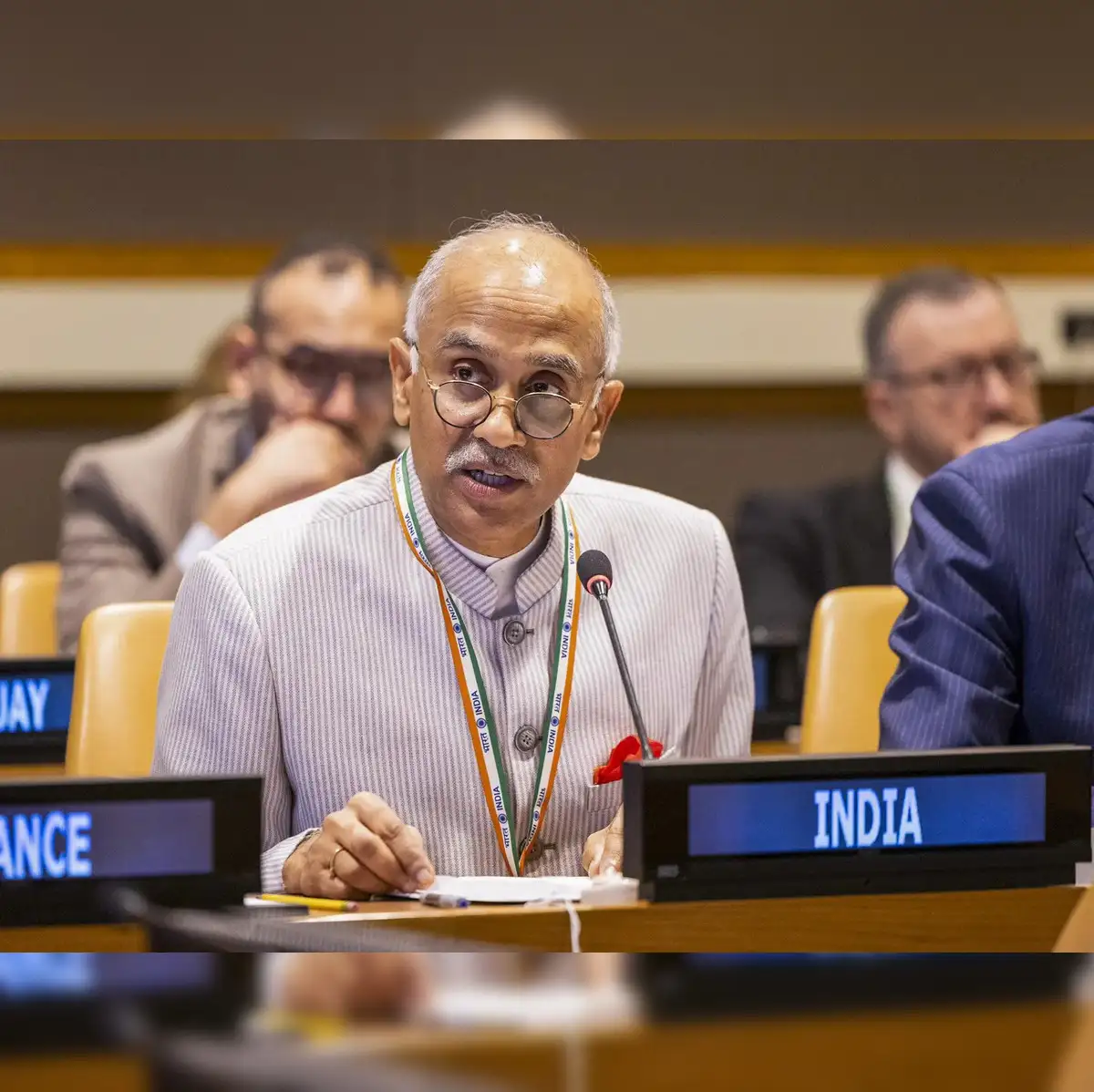
India is calling for global cooperation to halt the exploitation of Afghan territory by terrorist groups, notably Lashkar-e-Tayyiba (LeT) and Jaish-e-Mohammed (JeM). This urgent plea was made at a UN Security Council meeting on Afghanistan, highlighting the escalating security situation in the region.
The statement was made on Wednesday by India’s Permanent Representative to the UN, Ambassador Parvathaneni Harish, who emphasized the need for coordinated international efforts to address this critical issue. “The international community must coordinate efforts towards ensuring that entities and individuals designated by the UN Security Council, such as ISIL and Al-Qaeda affiliates, no longer exploit Afghan territory for terrorist activities,” he stated.
India’s Strong Stance on Terrorism
Ambassador Harish’s remarks reflect India’s ongoing commitment to stability in Afghanistan. He reiterated India’s “paramount interest” in ensuring the region’s peace, citing the country’s historical relationship with Afghanistan. “India and Afghanistan share a civilizational relationship,” he said, underscoring the necessity of international cooperation.
During the Council meeting, Harish pointed out that External Affairs Minister S. Jaishankar has engaged in discussions with Afghanistan’s Acting Foreign Minister Amir Khan Muttaqi. He welcomed the Afghan government’s condemnation of recent terrorist attacks, showcasing a growing resolve against terrorism.
A Call for Comprehensive Strategies
In his address, Harish stressed that to effectively tackle the complex post-conflict environment, it is vital to incentivize positive actions while discouraging harmful behaviors. He stated, “Focusing only on punitive measures is unlikely to yield desired results.” India’s approach advocates for fresh policy instruments and international support for Afghanistan during this turbulent time.
Further emphasizing the need for new strategies, Harish criticized a ‘business as usual’ approach, indicating such a method is insufficient for addressing Afghanistan’s dire conditions. “After more than four years of living under a sanctioned regime, the Afghan people have not seen much scope for enhanced development assistance and cooperation,” he remarked.
Humanitarian Efforts Amid Crisis
Amidst pressing issues of terrorism and political instability, India has been actively providing humanitarian assistance to Afghanistan. After a devastating earthquake last month, India was one of the first nations to respond, swiftly supplying 1,000 family tents and 15 tonnes of food.
The Indian government plans to dispatch additional relief supplies, including essential medications, hygiene kits, and more food aid, demonstrating its long-standing commitment to providing humanitarian support. As Harish explained, “We will continue to provide aid to the Afghan people who are suffering from poverty, disease, and hunger.” This includes ongoing support since the Taliban’s takeover in August 2021, which has encompassed the delivery of over 50,000 tonnes of wheat and significant medical supplies.
Looking Ahead: India’s Commitment to Afghanistan
Highlighting India’s extensive development partnerships, Ambassador Harish mentioned over 500 projects across Afghanistan aimed at reconstruction and cooperation. His remarks indicate a steadfast commitment to fostering Afghan autonomy and stability.
The Indian government’s humanitarian efforts also align with its broader goals for regional stability and cooperation. Harish reiterated India’s commitment to meeting the developmental needs of the Afghan population and stated, “Our commitment to the Afghan people is non-negotiable.” This statement reinforces India’s desire to promote peace, stability, and prosperity in Afghanistan as it recovers from its recent hardships.
Ultimately, India’s proactive stance at the UN underscores its role as a major stakeholder in Afghanistan’s future. The nation is facilitating international discourse on terrorism and recovery efforts, aiming to foster a safe, stable, and prosperous Afghanistan for its people.
