

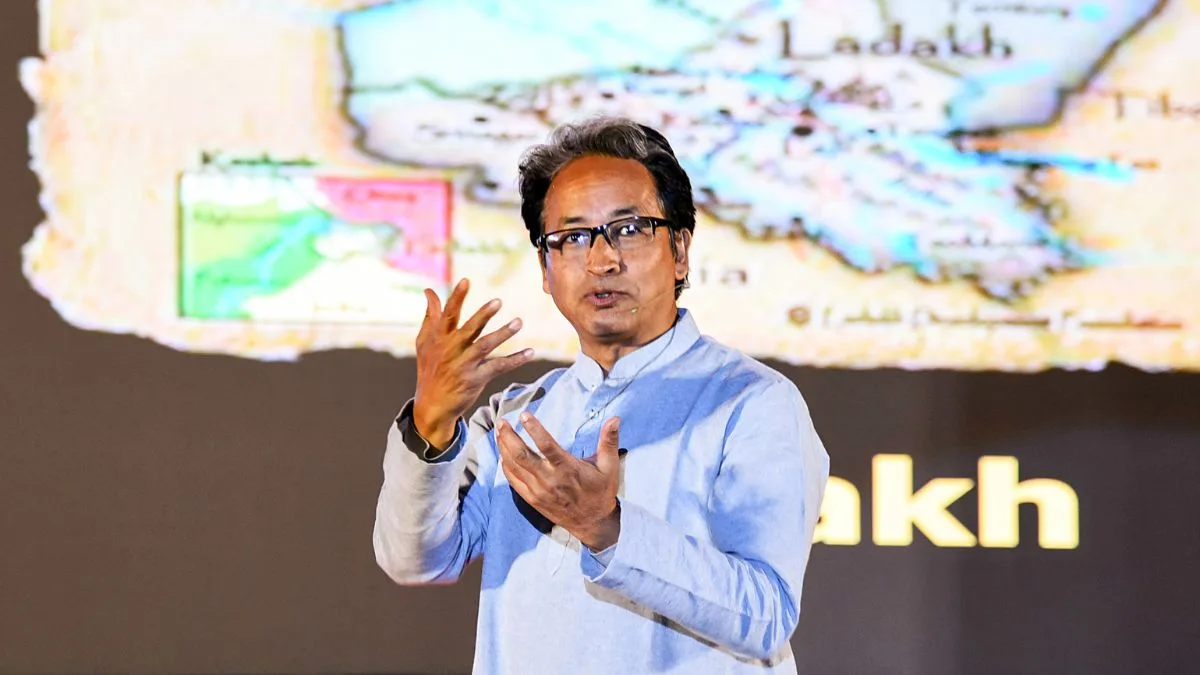
Climate activist Sonam Wangchuk has been detained under the stringent National Security Act (NSA) and transferred to Jodhpur Jail in Rajasthan. This development follows violent protests demanding statehood for Ladakh, resulting in four deaths and numerous injuries from police actions.
On Friday, the Ladakh administration announced Wangchuk’s detention in the early hours. His arrest came two days after protests erupted over demands for the Sixth Schedule, intended to provide greater autonomy and protection for Ladakh’s unique ecology.
Wangchuk began his 35-day hunger strike on September 10, advocating for political recognition and environmental safeguards. However, he ended the fast on September 24 amid escalating violence, which the administration described as a deeply regrettable turn of events.
The administration’s midnight statement detailed the reasons for taking such a drastic step. They noted, “Time and again, it has been observed that Shri Sonam Wangchuk has been indulging in activities prejudicial to the security of the state.”
Netizens reacted vigorously to Wangchuk’s detention, labeling the day a “black day” for the people of Ladakh. Many voiced their demands for the immediate resignation of Lt. Governor Kavinder Gupta, citing his responsibility for “indiscriminate” police firing.
The official press release emphasized that Wangchuk’s previous actions, including provocative speeches and misleading videos, incited violence during the protests. “His series of provocative speeches, references to the Nepal agitations, and the Arab Spring incited unrest that led to violent confrontations with the police,” the statement elaborated.
This incident highlights the underlying tensions in Ladakh, particularly since the region’s transition from a Union Territory and the push for statehood has garnered significant public interest. The Ladakh administration claimed the need for restoring order, stating, “To ensure this, it is also essential to prevent Sonam Wangchuk from further acting in a manner prejudicial to the maintenance of public order.”
The broader implications of Wangchuk’s detention reverberate through social media platforms, where voices are rising against the perceived clampdown on activism and dissent. Experts view this action as a critical juncture in Ladakh’s political landscape, illustrating the challenges faced by local activists in their fight for rights and recognition.
In a region marked by its unique cultural identity and environmental concerns, Wangchuk’s activism emphasizes the urgency for comprehensive governance that reflects the aspirations of Ladakhi people. Many regard him not just as a climate activist but as a symbol of resistance against administrative overreach.
As further reactions develop, the community of Ladakh remains watchful, advocating for peace and dialogue over confrontation. The situation underscores the important balance between law enforcement and civil rights, raising critical questions about governance and community engagement in the region.
