

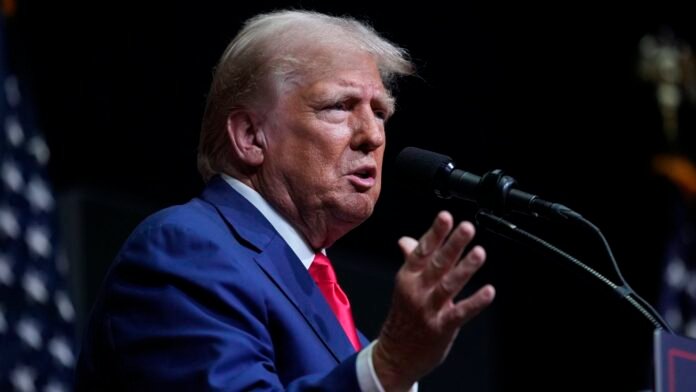
President Donald Trump has announced a temporary suspension of “Project Freedom,” which aimed to escort ships through the vital Strait of Hormuz, as negotiations with Iran show promising developments toward a potential agreement to end hostilities. This decision comes as the United States seeks to balance military action with diplomatic solutions.
In a post on Truth Social on Tuesday, Trump declared, “Great progress has been made toward a complete and final agreement with representatives of Iran.” This statement reflects a strategic pivot amidst ongoing tensions in the region. The announcement also hints at possible reductions in military operations while still maintaining pressure on Iran.
“Based on the request of Pakistan and other countries, and the tremendous military success we have achieved during our campaign against Iran, we have mutually agreed to pause Project Freedom,” Trump elaborated. He emphasized that the blockade will remain intact, but efforts to escort vessels through the Strait of Hormuz will halt temporarily to ascertain whether a final agreement can be secured.
Project Freedom launched only a day prior, aimed at evacuating ships immobilized by the closure of the crucial shipping route. This narrow passage is vital, as it facilitates the transport of approximately one-fifth of the world’s oil supplies. Initial reports suggested that the operation could further escalate tensions, particularly after the United Arab Emirates accused Iranian forces of attacking its vessels. The U.S. has also claimed to have neutralized several Iranian small boats during the execution of military operations.
Trump’s announcement comes shortly after U.S. Secretary of State Marco Rubio stated that Operation Epic Fury, initiated on February 28, had concluded successfully. Rubio noted, “We achieved the objectives of that operation. We’re not cheering for an additional situation to occur. We would prefer the path of peace.”
This perspective aligns with the administration’s aim for a comprehensive deal with Iran, which has remained elusive. Rubio asserted that “this is not an offensive operation; this is a defensive operation,” clarifying that U.S. forces will not instigate disputes unless provoked.
During his remarks, Rubio highlighted the urgency behind Project Freedom, aimed at rescuing nearly 23,000 civilians stranded in the Persian Gulf due to the conflict. He remarked, “We’re not attacking them, but if they’re attacking us or a ship, we need to respond.” Such statements underline the administration’s focus on ensuring the safety of civilians while navigating the complicated geopolitical landscape.
The suspension of Project Freedom raises numerous questions about the future of U.S.-Iran relations. The prospect of an enduring peace agreement looms large, yet many uncertainties remain regarding Iran’s willingness to adhere to negotiations.
As the situation evolves, both military experts and diplomatic analysts will closely monitor developments in the region. International stakeholders emphasize the need for dialogue while remaining prepared for any potential resurgence of hostilities.
The pause in Project Freedom marks a significant moment for the Biden administration, highlighting the intricate balance between military readiness and diplomatic engagement as the U.S. navigates one of the world’s most dangerous geopolitical flashpoints.
